Imaging on the International Space Station: What Space Teaches Us About Cameras That Cannot

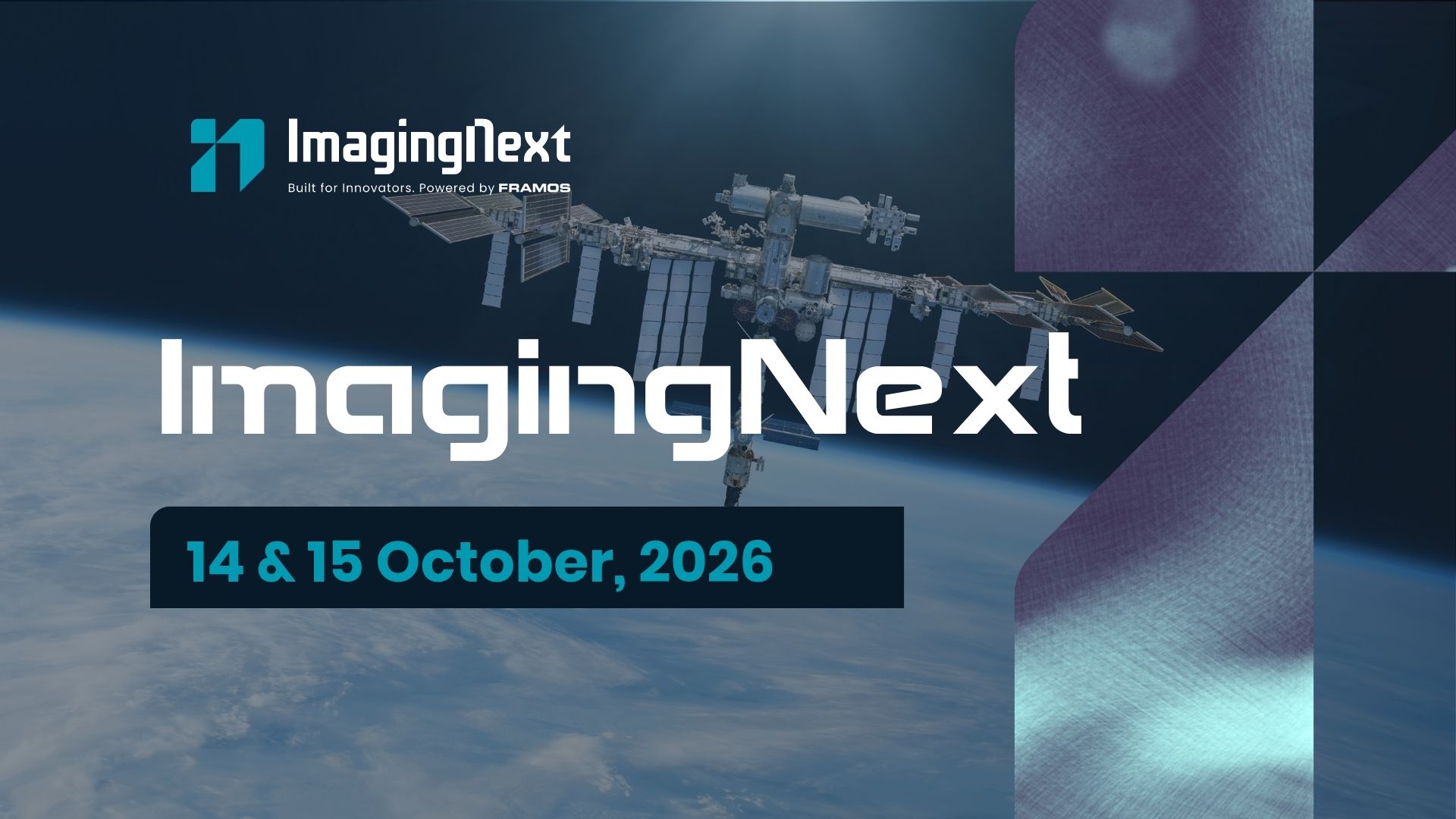
Most vision engineers design for environments where a failed camera means a service ticket. In orbit, it can mean a failed docking. Every imaging system that flies has to survive launch vibration, vacuum, radiation, and thermal cycling – and then work, first time, every time, with no one around to reseat a connector.
That is the world our keynote speaker comes from. At ImagingNext 2026, Dr. Sam Waldman, President of Neutralino Space Ventures, opens the conference with “Imaging on the International Space Station” – a look at how sensors and imaging systems are designed, tested, and flown for one of the most unforgiving deployment environments there is.

About Dr. Sam Waldman
Dr. Sam Waldman is President of Neutralino Space Ventures. At SpaceX he founded and led the team responsible for sensors and instruments across Dragon, Falcon 9, and Starlink, including the docking LIDARs for the International Space Station and the first-generation Starlink laser communication terminals. Earlier, he co-led the design and commissioning of the Enhanced LIGO detector for the Laser Interferometer Gravitational-Wave Observatory
Why this matters even if you never leave the ground
Space programs face an extreme version of problems every embedded vision team knows: hardware that must be validated before it can be observed in its real environment, sensors that have to perform across brutal thermal ranges, systems where a firmware update is possible but a hardware swap is not. The discipline that comes out of that – exhaustive characterization, simulation before hardware, designing for the failure you cannot rule out – maps directly onto industrial, medical, and autonomous systems where recalls and field failures are almost as costly as a failed launch.
Dr. Waldman founded the SpaceX team that designed, built, tested, and flew sensors and instruments for Dragon, Falcon 9, and Starlink – including the Cargo and Crew Dragon LIDARs used for docking with the International Space Station, human-rated inertial measurement units, gas analyzers, safety-critical pressure transducers, and the first-generation Starlink laser communication terminals.
Before SpaceX, he co-led the design and commissioning of the Enhanced LIGO gravitational-wave detector.
What you’ll take away
- How imaging and sensor systems are qualified for flight – and which parts of that discipline transfer to industrial vision programs.
- What “designing for zero service visits” changes about sensor selection, redundancy, and validation.
- Where simulation and ground characterization end and real-environment surprises begin.
Imaging on the International Space Station: What Space Teaches Us About Cameras That Cannot Fail
Don’t miss Sam’s keynote at ImagingNext 2026 – two days on end-to-end Vision AI systems, edge deployment, and honest engineering exchange. October 14-15, smartvillage Bogenhausen, Munich.