


FSM:GO IMX06A 8K+ Camera Module with 122° HFOV Lens
IMX06A camera module with 122° HFOV and 8K UHD up to 50.3 MP resolution ideal for aerial surveying, teleconferencing, sports analytics and broadcast streaming.

Produktübersicht
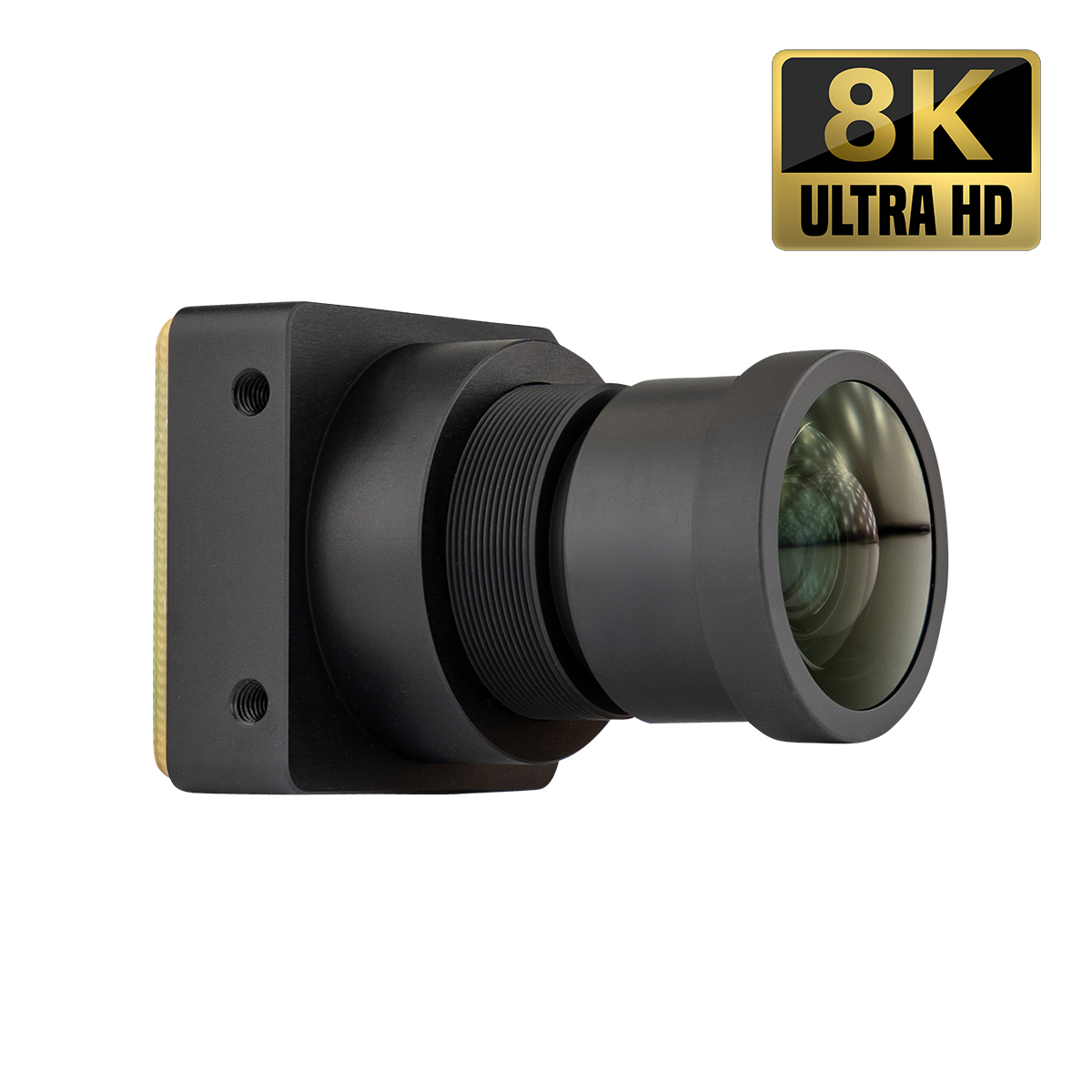
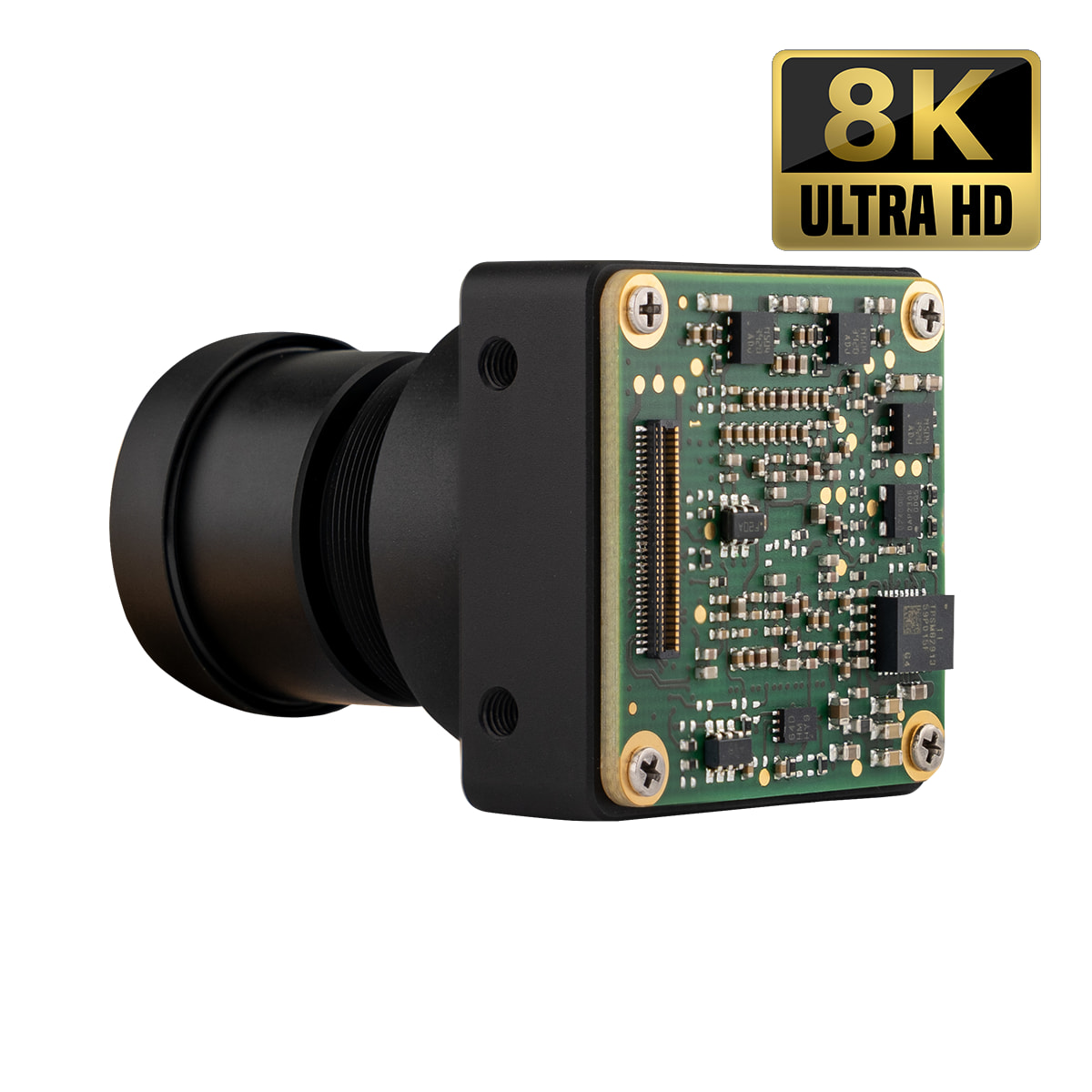
The FSM:GO camera module with the IMX06A sensor and a 122° HFOV lens delivers wide-area imaging for applications that need to cover more of the scene per frame, such as aerial surveying and mapping, UAV inspection imaging, wide-area sports and broadcast capture and teleconferencing. Built on Sony’s 50.3 MP 1-inch Quad Bayer sensor, this module supports a wide range of resolution and readout modes, the most commonly used being 8K UHD video for wide-area coverage, full 50.3 MP resolution at up to 15 fps for maximum detail, and a 12 MP binned mode for four times the pixel area in low light. Its all-glass M22 lens is paired to the sensor and attached to the module in FRAMOS’s dedicated vision manufacturing facility, so you don’t need to source or mount a lens yourself. The module connects over 4-lane MIPI CSI-2, with FRAMOS drivers and ISP-tuned pipelines available for NVIDIA Jetson Thor and Jetson Orin. This camera module presents a clear upgrade path from IMX183 or IMX283-class sensors on the same 1-inch format.
- →Lens paired and attached
A 122° F/2.8 all-glass M22 lens matched to the 1-inch Quad Bayer sensor, paired and attached in production - →Many resolution options, one sensor
8K UHD video for wide-area coverage, 50.3 MP full-resolution mode at up to 15 fps, 12 MP binned mode for low light. - →Drivers and ISP tuning
FRAMOS drivers and ISP-tuned pipelines for NVIDIA Jetson Thor and Jetson Orin, maintained on GitHub.
Produkt Spezifikationen
-
 Sensor Name
- IMX06A
-
 Sensor Hersteller
- Sony
-
 Shutter-Typ
- Rollladen
-
 Chromatik
- Color
-
 Auflösung [MP]
- 50.3
-
 Max. Bildfrequenz [fps]
- 10/12Bit: 15
-
 Daten Schnittstelle
- MIPI CSI-2
-
 Schnittstelle
- PixelMate (60 pin)
-
 Sichtfeld Horizontal [°]
- 122
-
 Blende
- 2.8
-
 Sensor Technologie
- Stacked BSI, Low CRA, Quad Bayer RGB
-
 Sensor Größe
- 1/0.98
-
 Pixelgröße [µm]
- 1.6
-
 Horizontale Auflösung [px]
- 8192
-
 Vertikale Auflösung [px]
- 6144
-
 Datenspuren [#]
- 4
-
 Objektivfassung
- M22 x 0.5
- Lens Construction
- Glass
-
 Material Fass
- Metal
-
 Optischer Filter
- IRC
- IR Cut-Off Wavelength
- 650±10
-
 Focal Length [mm]
- 5
Letzte Blogbeiträge
Unsere neuesten Artikel
Willkommen in unserem Blog-Bereich, wo Wissen auf Inspiration trifft. Entdecken Sie aufschlussreiche Artikel, Expertentipps und die neuesten Trends in unserem Bereich.
Alle ansehen
Inside-Out, Outside-In: Two Ways Vision AI Enters the Factory
Physical AI is moving from research labs onto the factory floor along two distinct paths. One begins with digital twins, simulation, and synthetic data before a robot reaches real hardware....
Mehr lesen
Bridging Sensor and SoC: Co-Optimization Strategies for Next-Generation Vision
As imaging moves toward smarter, faster, and more efficient systems, modern vision applications demand more than incremental improvement. They require deeper synergy and better co-optimization between sensors and SoCs. Design...
Mehr lesen
Unlocking New Capabilities: How Sony’s Image Sensors Are Advancing Industrial Vision
Industrial vision is evolving to support faster, more accurate, and more adaptable inspection. Advances in image sensors – from high-resolution and HDR imaging to short-wave infrared – are enabling better...
Mehr lesen
Embedded Vision Beyond Autonomous robots
Embedded vision is widely recognized in modern mobility applications such as autonomous driving, advanced driver-assistance systems (ADAS), AMRs, AGVs, drones, and humanoid robots. Besides these relatively new application areas, there...
Mehr lesen
From Prototype to Production: Building AI at the Edge
An AI model that works on a development board is still a long way from a production-ready edge device. The final system must capture useful data, process it within a...
Mehr lesen
Industrielle 3D-Kameras: Robuste 3D Vision Kamera für die Automatisierung – FRAMOS D435e mit GigE & IP66
3D-Kameras für industrielle Anwendungen müssen in rauen Produktionsumgebungen arbeiten und bewegte Objekte bei Geschwindigkeit zuverlässig erkennen, z. B. wenn die Kamera an einem Roboterarm montiert ist. Eine stabile und latenzfreie...
Mehr lesen
Was sind Tiefenerkennungskameras und wie funktionieren sie?
Die Innovationen der letzten zwei Jahrzehnte in den Bereichen eingebettete Systeme, Robotik, industrielle Automatisierung und autonome Fahrzeuge haben alle eines gemeinsam.
Mehr lesen
When Robot Safety Becomes a Perception Problem
For decades, robot safety was based on separation. Cages, light curtains, guarded workcells, and emergency stops kept machines and people apart. Physical AI changes that model. Robots increasingly share space...
Mehr lesen